Mesima Mushroom: oz
250 $
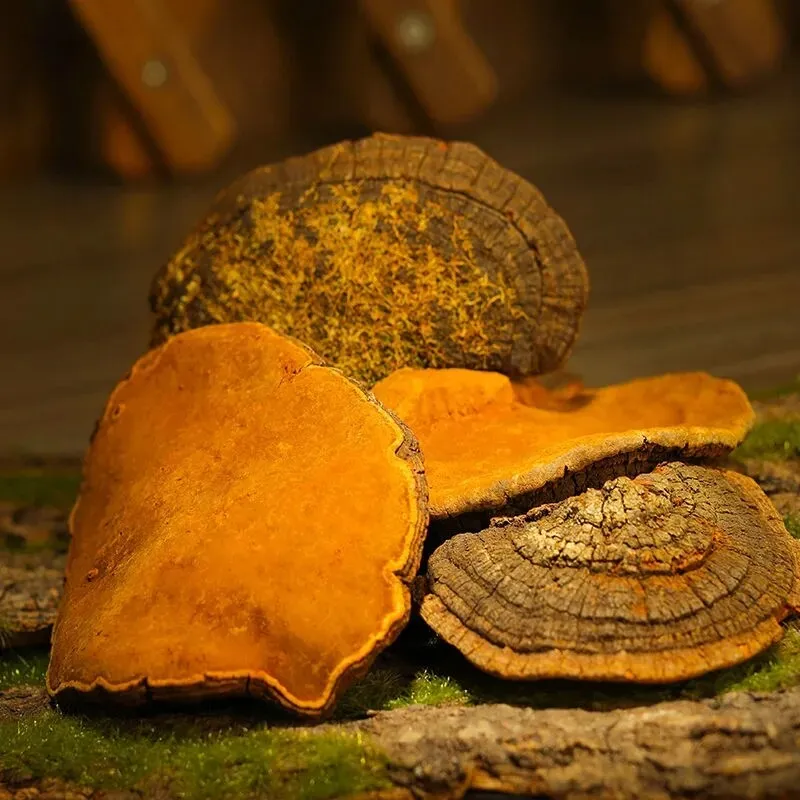
Mesima Mushroom is a fungus also called Phellinus linteus, that feeds on the wood of many trees, especially mulberry trees, and creates a woody, perpetual fruiting body that resembles a big hoof. In many regions of the world, it grows wild, and in Asia, it plays a significant role in traditional folk medicine. Its descriptive common name in English is “black hoof,” but English speakers frequently choose to use the scientific name or one of the Asian names instead. The term “mushroom” is referred to as “sangwhang” in Korea, “sanghuang” in China, and”meshimakobu” (or “mesima” for short) in Japan.
Curiously, there has been some controversy over whether the mushroom mentioned in the folklore is indeed P. linteus, or whether it is instead one or more indistinguishable species that are similarly related. The current research being done into the true medical capabilities of the fungus takes on an interesting dimension as a result of the ambiguity.Mesima Mushroom.
In China and Japan, the Mesima Mushroom has been prized for a very long time. For energy and long life, the emperors of the great Chinese dynasties and Japanese royalty consumed tea and concoctions produced from Phellinus linteus. In 220 BCE, the first emperor of China, Emperor Qin Shi Huang, despatched 3000 youths and girls to the far islands of Japan to look for this funghi, which was thought to be the secret to endless youth. The Effects of Mesima.