Agarikon : oz
250 $
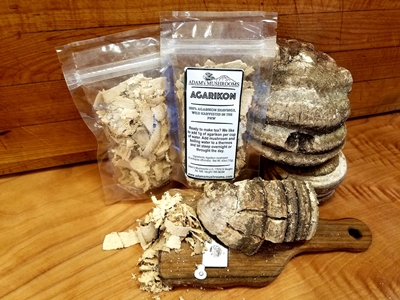
The Laricifomes officinalis is also known as the Agarikon mushroom, Fomitopsis officinalis, and Fomes officinalis in the past. It will henceforth be known as Agarikon. Agarikon is also known as quinine conk despite the fact that it just tastes bitter and the conks themselves have a highly bitter flavor. Further research has revealed that Agarikon does not actually contain quinine. Other names for it include Gharikon or Agharikon, and it has long been used medicinally in Iran. Due to its potential for healing, Agarikon has been used for thousands of years not only in Iran but also around the world. It was first reported by the Greek physician and pharmacologist Dioscorides Pedanios in the first century AD. He suggested Agarikon as a remedy for disorders brought on by ingestion, such pulmonary tuberculosis. Agarikon\’s fruiting bodies have also been sculpted into Native American ceremony masks, demonstrating the immensity of this mushroom. Agarikon.
The Agarikon can grow to be over 50 cm long and quite huge. Agarikon like to grow in old-growth forests, which are becoming more and more scarce, making it harder to find. It particularly enjoys growing in the Pacific Northwest, which has had heavy logging. Climate change may potentially put the Agarikon at risk because there has apparently been a sharp fall in the population of these mushrooms.
It is widely dispersed in the Northern Hemisphere, namely in North America, Asia, Europe, and Morocco. The fungus can grow anywhere from the host tree\’s base to over 20 meters in the air, but thicker branches are rarely affected. Agarikon prefers a moderate climate, while others claim it also enjoys marshes. Laricifomes officinalis.
We suggested Agarikon as a remedy for disorders brought on by ingestion, like pulmonary tuberculosis. Agarikon’s fruiting bodies have also been sculpted into Native American ceremony masks, demonstrating the immensity of this mushroom. Agarikon Immune